
Kralk: Becoming Troll
In the deep, the stone remembers the names we forget.

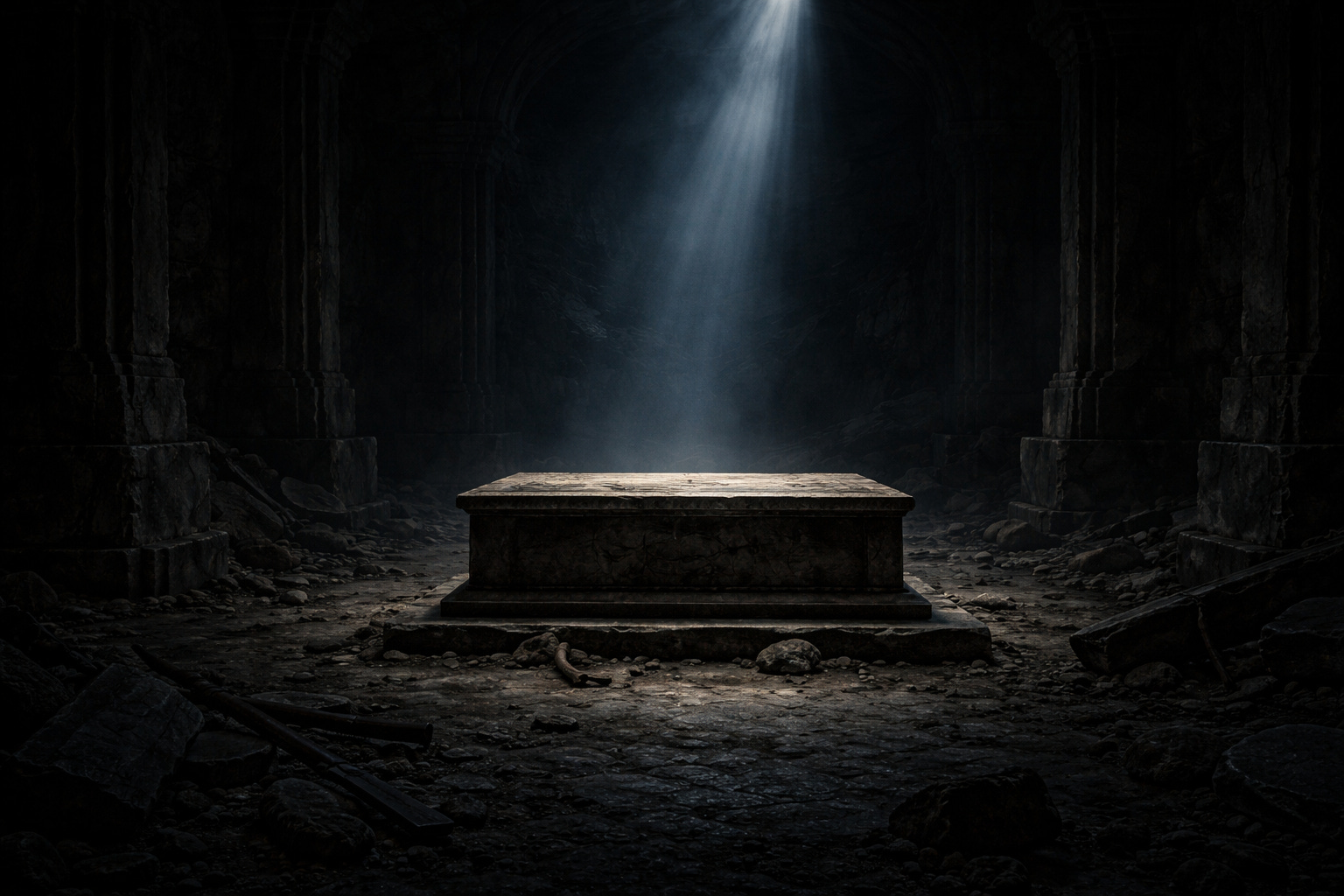
A Reconstructed Testimony from the Moria Incident
Compiled from fragmentary sources and disputed accounts.
Translated and annotated by Dr. Karl Voß
The tunnel sloped like a gullet. Its ribs of stone strained overhead, black with soot. Old forge-chambers sat like rotten teeth in the walls and the scent of scorched bones drifted with the heavy air, mingled with old oils and long-dead fires. It was not cold. There was a breath beneath the mountain and it sweated.
The orcs moved low in the passage, hunched and swaying, their voices thick with phlegm and smoke. They did not shout. They did not curse. Their words were not the tongue of cruelty but the tongue of fear.
Nine.
Nine shapes had come through the Watcher’s gate. They had breached the water and the wards and the teeth of the dark. No alarms were raised. No warhorns. They passed the old places like ghosts. They were not stopped.
Nine.
One had worn grey robes. Beard like rotted straw. Thin fingers. The old mothers said he had passed before, decades or centuries ago. He had gone up the high shafts like smoke. No one touched him. No one dared. He was remembered by the deep-kin as the Ghost That Burned Cold. A fire with no smoke. An eye with no face.
He had returned. But this time he brought others.
The orcs had seen them. In glimpses, in flickers. Their boots left no prints. Their shapes were wrong. There was a pale-wood one, like a tree that had peeled itself from the soil and grown limbs. There was a rock-breaker with the smell of dwarf-kin but not the song. They had weapons. Ancient weapons. They walked like they belonged..
Two of the tall ones bore the air of kings. Long steps. Eyes like sharpened iron. And the rootlings. Four of them. Half the height of men and not right. The orcs called them shurk-ûrz - root-things. Creatures that belonged buried. Like tubers or bones. Not walking. Not breathing.
They had no banner. No cry. They moved without drums. That made the dread worse.
It was Skurn who broke the silence. Skurn who stood tall among them with four teeth rotted to black and the others filed to a knife’s edge. His armor was patchwork, ringed with burn-scars, etched in old blood. He wore no helm.
He turned to the forge-priests, the bone-bed singers, the keepers of the ancient rites. He spoke only once.
Light the stone-womb.
The priests hissed and scraped. They knew the word. The Ghashn-ûg Kha’drûm. Fire in the stone-womb. It was not a weapon. It was not a plan. It was a birth.
They would unbind the stone-beast.
They would wake what should not wake.
They would send it up the black throat of the deep to meet the nine.
To make the nine bleed.
To make the nine remember.
To make the nine afraid.
He was already set apart. He did not fight like the others. He did not hoot nor howl nor boast. He fought like a wheel-without anger, without pause. When he slept he ground his teeth against stone until his gums bled. The others had learned not to speak near him. When he looked at you it was like being seen through smoke.
He was broad in the chest and thick through the neck, the weight of long labor set into him and not leaving. His limbs bore it, heavy with old strain. His hair was long, black as soot, as it was among his people. His face was squat and wide. The nose lay flattened across the bridge, broken and left so. The skin had gone sallow, a dull yellow-brown drawn tight over high cheekbones. His mouth was wide, the corners slack, the lips parted as if breath did not come easily even in stillness. His eyes were narrow and set at an angle beneath a heavy brow, dark when they found a thing to hold, though they did not hold it long.
His name had once been Grakhnor. It was not spoken now. In the deep tongues names were shed like skin. Skurn had looked at him in the firelight and said nothing. Grakhnor had nodded. He knew what he was. He knew what was coming.
They took him to the Chamber of the Iron Birth, deep where the forge-ash had turned the stone red and nothing grew but white filament fungus and bones of blind rats. There the priests were waiting. They were naked to the waist and daubed in grease and dried blood. They moved with the silence of those who had eaten too many truths.
They laid him down in a shallow pit and brought forth the stones. First one, then another. They were flat, heavy, and slick with age. They placed them across his legs, his belly, his chest. One they set upon his throat.
He made no sound.
He watched the smoke of the torches climb the ceiling until his vision narrowed and the world became only his breath and the pressure of earth. The weight pushed into his ribs until his heartbeat was no longer his own but belonged to the stone.
The priests stood over him and chanted.
Stone eats breath.
Bone forgets name.
Rise. Break. Kill.
Then came the second chant. Lower. Faster. Spoken not in rhythm but in hunger. It came from the shaman’s throat and the old orcs took it up with foam on their lips.
Fang for flesh.
Maw for moon.
Let the beast inside be loosed.
One of them knelt beside the pit and pressed a scarred hand to Grakhnor’s chest. Another howled-not in voice, but in throat. A growl that rumbled into a bark and snapped into silence.
They pulled the stones off and he did not rise. They dragged him upright, arms limp. His skin was blue around the mouth. His eyes blood-rimmed and far away.
They painted him with clay from the flooded shaft, mixed with the ash of burned wargmeat and the blood of a stillborn orcling. Lines were drawn like veins, coiling and jagged, symbols carved into the flesh with sharp bone.
A warg’s lower jaw, stripped of hide and boiled clean, was lashed across his chest with sinew cord. The teeth rattled when he moved. It was not just a symbol. It was a yoke. A tether. A beast’s snout pointing the way.
His fingernails were torn out with a heated hook and the beds wrapped in rawhide. One of the priests whispered to him through cupped hands, voice trembling.
You are not stone. You are what stone fears. You are not warg. You are its end.
He began to shake. One of the priests held his jaw open and poured the draught down his throat. Thick and bitter. Bile. Rotmilk. Pulverized marrow fungus. A fermented sludge.
He choked. He vomited. They scooped it and poured it back again.
His legs buckled.
The shaman came forward last. The old one with the eye stitched shut. In his hand was the black stone cudgel, curved and blunted with many uses. He stood behind Grakhnor and whispered a name no one understood.
Then he struck him at the base of the skull.
There was a crack and the world vanished.
He did not fall.
He folded inward, like water poured into a skin.
When his eyes opened he could not name them. The lights were not flames but wounds. The faces were masks made of noise. He could not feel his legs. His arms were wrapped in fog.
Words died. Memory thinned.
What remained were shapes. A mouth. A curve of bone. Heat. Hunger.
The drum had started somewhere, perhaps outside him, perhaps in his ribs.
doom doom doom
The rhythm was the only truth. The only word.
Not Grakhnor. That was gone.
Only Kralk.
And Kralk was not a name.
Kralk was the sound a rib makes when it splits.
They dragged him up the vein-stairs in chains of black iron, four orcs to a limb, the links screeching over the stone as if the rock itself cried out. His feet scraped the floor. His mouth hung slack. From it came not words but a long low growl like a furnace without breath. When he twitched they beat him. When he screamed they screamed back. When he laughed they wept. One of them had already lost an ear to his bite. They kept the chain tight. The link that touched his throat had cut into the skin. A ridge of clotted blood ringed his neck like a crown.
He did not know where they took him. He did not care.
He smelled ahead of him.
The scent wafted down the tunnel and entered his skull like smoke.
Elf-sap. Dried treeblood, bitter. Sharp like old wind.
Rock-flesh. Kin-rot. The smell of traitors and tunnel-killers.
Steel-oil. Heated leather. Men of war, but not of orckind. Their sweat foreign. Salt without meat.
And something else. A thing beneath the thing. Fire in wool. Power behind bone. Death behind life.
The grey one.
He knew it before he saw it.
It was a memory inside his bones not wholly his own. A shape he had seen not with eyes but with the nerves behind them, learned before knowing. The thing in grey. He had passed once, a long age ago. He had walked the halls and the orcs had hidden. He had not raised a hand and still the stone had whispered of him. A being too still. Too soft. Like fog that burned.
He was here now. Above them.
Kralk began to shudder.
They reached the upper halls.
Beyond the doors lay the old chamber. The Stone-King Cradle. The orcs would not go further. They pressed Kralk against the wall like meat. One reached to strike him to stillness but stopped. Kralk’s eyes were open. He was smiling. His lips split.
From inside the chamber came sounds.
Footsteps over bones.
A voice. Low. Measured. Speaking the names of the dead.
The grey one.
Kralk felt the sting again. He had returned. He twisted his head. The chain bit deeper.
He remembered nothing. But he remembered the grey one.
The drum began.
Not outside. Not below.
Inside.
doom…
A heartbeat not his own.
doom…
A sound without language. The sound of earth cracking. Of a tooth grinding against the root.
He leaned forward.
The orcs held him.
He leaned again.
His teeth began to chatter.
doom… - doom… - doom -
He opened his mouth and howled.
It was not a battle cry.
It was the death-wail of memory.
He waited in the dark mouth of the hall. The chain across his throat trembled. His arms jerked without rhythm. His breath came in sharp grunts through his teeth. Not from fear. From hunger. From the drum inside him. It beat against the meat of his mind. It sang in his broken blood. doom doom
The others were there, his keepers. They would not meet his eye. They held the chains like farmers hauling a threshing ox. The skin of their arms burned where it touched his. The shaman had warned them. Do not bind him in the light. Do not name him when the stone sings. But they were pressed now. Pushed to the edge of their own belief.
The doors of the chamber shook. Cracked voices. Shouts in the tongues of men. The clang of steel on stone.
Then came the breach.
The door at the east burst inward, and the orcs screamed and poured through, like floodwater through a shattered dam. The sound that followed was not music. It was meat meeting metal. The crack of bone. The tearing of flesh. The snarl of black iron through leather and sinew. It was life as understood by the old gods - loud and blind and final.
Kralk flinched.
His chain pulled taut and he dragged three orcs forward by the neck.
He smelled them now. The nine. They were inside the chamber. Moving. Killing.
The tree-thing-the elf-sang arrows. Not words, not songs, but notes made of death. Whistle and thump. Whistle and thump. Orcs fell with holes in their heads. One collapsed against the wall, eyes leaking light.
The rock-kin was roaring. Standing atop the stone-cradle. He swung an axe in great wheeling arcs and laughed with the voice of earthquakes. The axe came down and crushed a shoulder. Then a skull. Then another. Each blow a word.
One of the rootlings - Kralk smelled his panic - had hidden behind the tomb. The stench of sweat and dirt and fear rose like steam. Kralk turned toward it.
He began to tremble. The chains rang like windchimes.
He could not see the elf. He could not see the dwarf. He could not see the grey one. But he could smell them all. Each one a sound in his skull.
He was fire held in a cup. And the cup was cracking.
He twisted his neck.
The chain slipped.
The orc at his left looked up and saw that Kralk was not with them anymore. Kralk was inside something else. A furnace of stone and blood and movement.
He jerked his arms once and the chain snapped.
There was no order.
There was no command.
They loosed him not out of ritual but because they had no choice. The thing they had built could not be kept. It would either go forward or it would turn on them. It did not matter which. The breaking was ordained.
Kralk stepped through the door and into the chamber.
And the sound of the world narrowed to a single word.
Kill.
Kralk entered the chamber like a hammer dropped into water. He did not run. He descended. Each step echoed through stone. The bones of the fallen popped beneath his heel like beetle shells. He was not large, not more than a head taller than the tallest man. But he seemed to drag the dark with him. The air bent. The torchlight guttered. The sound of his coming filled the ribs of the room.
There was a silence before the scream.
The orcs parted at his back like smoke. They no longer followed. They had called him forth and now they would not speak his name.
In one hand, he held a mace taken from the old wars. A head of stone and iron bound with bands that had eaten years of soot and honed with blood. The weight sat in his hand like a promise. In the other, he gripped the length of broken chain, still slick with the stink of orc-sweat and his own black blood. When he swung it, it sang. When it struck, it split.
He bellowed.
The voice came from his gut but it was not a roar. It was not challenge or command. It was the cry of the forge, the scream of stone being shaped against its will.
The nine stood before him, scattered across the stone.
He saw the tree-thing, bow already half-drawn. Eyes like winterglass.
He saw the rock-kin, panting atop the stone cradle, red to the elbows.
He saw the two tall ones, blades raised.
And he saw the fire-man.
The grey-cloaked figure turned.
And Kralk stopped.
He had never seen the grey-one, yet he knew his face in the way men know the faces of gods they have feared since childhood.
The eyes were there. Like holes in the world. Like heat in a dream.
He stepped forward.
And the fire pushed him back.
There was no wind. No sound. No word. But he felt it. A wall of heat, like stepping too close to the pit. Not burning. Judging. And the stone beneath him groaned.
He turned away. He could not go that way.
He screamed again and swung the chain. It struck the wall and split a brazier in half. Coals flew. Light stuttered.
Something struck his shoulder. A hard punch. Heat. He lurched and the mace dipped. He did not understand the sting. He only understood the fact of it.
He tasted the red now. Not blood but something older. A memory in the tongue. Iron and smoke.
A shape moved.
Small. Low to the ground. Afraid.
A root-thing.
It stood with eyes wide. No weapon drawn. Bare hands at its sides. It looked up at him like a child to a storm.
He raised the mace.
And he struck.
But the small one was not there.
The chain went tight. The tall men had it now. They hauled back with the hatred of men who believed themselves appointed to rule over blood and bone. The links cut deeper into Kralk’s neck. For a moment, his sight narrowed to a red tunnel and the drum inside him rose to drown the room.
He turned with the chain still on him. He swung wild. The rock-breaker ducked under the arc and rolled away like a stone with a mind. The mace struck a pillar and the pillar rang. Kralk’s arms went numb and he swung again.
A tall-man stepped close, blade up, face set in a kind of faith. Kralk caught him with the back of the mace, not the head. It was enough. Armor clanged. The man flew across the tomb area and landed hard among broken bones. He did not die. He lay there stunned as if he had been shown something he could not accept.
Kralk’s swing took him full in the chest. The body folded and slid away without a sound. The orcs at the door recoiled. They had called him forth and still they wanted to believe he belonged to them.
The rock-breaker came in again, low and fast. Kralk felt the movement at his knees. Something struck him and stuck. An axe or a knife, he did not know. It bit into his flesh and stayed there. Rage rose clean and bright. He roared and the roar came up out of him like smoke from a furnace.
He smashed the stone tomb trying to reach the rock-breaker. The old carved lid broke. Dust and fragments poured down. The chamber filled with the smell of ancient stone.
The rock-breaker kept moving. Ducking. Rolling. Always under the swing and away from the head of it. Kralk hunted him with the mace and only found air and stone.
Then the pale-wood one struck him twice in the chest.
Two heavy impacts. Two deep thuds that drove the breath from him. The room tilted. Kralk stumbled backward and the mace slipped. His fingers opened without his consent. The weapon hit the floor with a sound like a gate closing.
Kralk reached for it and instead found chain.
He tore the length of broken chain from his own wrist, still slick with blood and sweat, and hurled it toward the pale-wood one. The links whipped through the air and hammered into pillars. Stone burst. Dust rose in grey plumes. The pale-wood one was not where the chain landed. He was never where it landed.
Something climbed onto Kralk’s back. Light as ash. A weight that should not have been there. Kralk twisted, trying to bite at the air. A point of pain struck his skull, a sharp tap. An arrow. It glanced away as if his head were stone. Kralk thrashed and swiped. The thing on his shoulders was gone. The pale-wood one stood elsewhere, calm, eyes cold, as if he had known the path of every blow before Kralk made it.
Kralk hated him for that.
But hate was not hunger.
And the pale one carried no fear. None he could taste. None he could drink. The elf stood as still as old bark, his heart quiet, his scent thin and disciplined. Not prey. Not yet.
Kralk’s head turned instead to warmer smells. Quicker breaths. Small bodies packed tight with panic. The rootlings. Their fear came off them like sap split by heat. Easy. Loud. Alive.
He bent and seized the mace again.
Kralk swung at the rootlings and the mace tore air and clipped stone. The rootlings scattered. They scampered, feet slapping, scrambling for gaps and shadow. He smelled the one on the left. He turned his head and found him. The small one behind the pillar. The one with the wrong courage. He did not know the name. He only knew the scent of someone led.
Kralk drove forward. He roared in the small one’s face and the sound shook dust from the ceiling. The rootling recoiled into a corner. Kralk reached down and took him by the foot. He dragged him out across the floor like meat.
The rootling struck at his wrist. A small blade. A cut that burned. Kralk let go, not from mercy but from surprise. The drum faltered. The room looked different for a breath, as if something had shifted behind his eyes.
He lifted the mace to finish it.
A spear drove into his abdomen.
It entered deep. A hard pressure. A cold intrusion. Kralk staggered, the mace dipped. Stones struck his face. Two small ones on the far side were throwing what they could find. Their rocks bounced off his brow. One chipped tooth. Blood filled his mouth and he swallowed it.
He turned and backhanded the tall-man who had speared him. The blow was not careful. It was simply force. The tall-man hit a pillar and fell limp, unconscious, his blade clattering away. Kralk did not watch him. He reached down and seized the spear shaft in his gut. He pulled.
The wood scraped through flesh. The world flashed white. He roared, not in pain but in refusal. He ripped the spear free and blood poured down his belly in thick dark sheets. The drum resumed.
doom… - doom… - doom -
The rootling crawled toward the fallen tall-man. Checking him. Touching his face. A gesture that meant nothing to him. And still it stung, as if the small one could not see the truth of what he was.
Kralk advanced with the spear.
First thrust. The rootling dodged into the corner.
Second thrust. Kralk drove it to block the path, pinning the small one to the stone by threat alone.
Third thrust. He struck.
The barbed steel plunged into the thing’s chest and he felt it catch, as if it had found bone. The haft in his hand vibrated. The rootling’s feet lifted from the ground and its eyes did not close.
It made a sound like wind through leaves.
And then it stopped.
Kralk stood still.
For a moment, he forgot to breathe.
The grey-man cried out.
The nine moved.
The drum still beat-but now it was distant.
He had struck.
But the root-thing did not fall.
The spear held fast in the thing’s chest. It had struck true. He had felt the meat give. The jolt up his arm. The rootling should have split. Should have folded. Should have gone to ground like all the others. But it did not fall.
It looked up at him.
Its eyes were wide and still. Not in terror. Not in hate. Just open. As if it were waiting for something. As if it had not yet decided whether to die.
Kralk stood motionless, the barbed iron shaft jutting from his fist like a branch grown from bone. He stared.
The drum inside him began to falter. Not stop. But stagger. Like a heart skipping beats.
doom… - doom… - doom -
He snarled and twisted the spear.
The thing coughed. But it did not fall.
He blinked.
And for the first time since the stone-womb, the world cracked.
Confusion spread through him like cold water. He had done what the drum demanded. He had pierced the lie. Yet the lie would not break.
The spear had not killed this small one. The rules did not hold. The deep did not teach this.
From the edge of the world, two of the small ones came onto him then, small bodies leaping, blades flashing. They stabbed furiously at his arms, his shoulders, anywhere they could reach. It was like being bitten by rats.
He grabbed one of them by the torso. One-handed. The small body thrashed. Kralk felt bone under cloth. He held him up as if weighing him, as if the world might explain itself through this.
The rock-breaker and the grey one struck at him. Steel and staff and fire that did not burn. Kralk swung the spear and the rock-breaker went down on his back. The rootling slipped from Kralk’s grasp and fell hard. The grey one was there and not there, always just outside the arc of his wrath. The old one in grey never stepped near the iron path of Kralk’s rage. The others bled. The others faltered. The grey one moved like a man who already knew.
The remaining rootling struck Kralk’s head with his blade. A sharp blow. It rang in his skull. Kralk reared back and bellowed. His neck opened. The tendon and the soft place beneath the jaw, exposed to air.
And then-black feather.
The sound of it was nothing. The sound of the air parting. A whisper. A wingbeat.
Then pain.
His throat.
He staggered back and the taste in his mouth changed. It was not blood. Not the old red he loved. It was black. Copper. Hollow.
He reached for the shaft in his neck. His hand came away slick.
He opened his mouth. No sound.
The chamber spun. A sudden vertigo. As if the world had been tied to a wheel and someone had loosed it.
He heard no answering cries. No orc-laughter. No iron voices. No feet rushing in behind him.
The chamber was empty of his kind. They lay where they had been cut down, thick bodies stilled by small hands and thin blades. The walking prey had done this. All of them.
Kralk understood then that the fight had already ended. He was the last sound left in the stone.
The spear fell from his grip. The chain slid from his wrist. His hands clawed at the air.
He saw the tomb.
He saw the stone it was carved from. Remembered the cradle in the deep. The warmth of the earth above his chest. The weight. The silence.
He wanted it back.
He stepped once.
Twice.
His knee buckled.
The grey one was shouting now. The dwarf roared. The elf nocked again. The air was fire.
Kralk turned toward the stone. His arms slack. His breath a hiss.
He fell forward, like a felled wall, not killed but finally allowed to die.
The sound of his body on the stone was heavy. Wet. Final.
He did not move again.
He lay where he had fallen, limbs splayed, breath coming in thin whistles. The chain unwound from his fingers like a shed skin. Blood pooled beneath his jaw and soaked into the cracks of the stone, turning dust to paste. He did not feel the pain. The pain had gone. What remained was the silence.
The silence pressed in.
He blinked.
And for a moment, his mind returned.
Not all of it. Not like a door flung wide. Just a flicker, like a torch behind a curtain. Enough.
He saw the deep tunnels, where the stone dripped and the roots crept through cracks and the light came only in the shapes of glowing mold. He was small again. Narrow-shouldered. Barefoot. Carrying a rusted knife.
He heard the song of the rocks, the one the deep-mothers whispered to their brood when the forges cooled and the night was long.
Grakha-lûm, Grakha-lûm, stone holds the name when the fire goes dim.
He tried to speak it. The song. The name.
But his mouth was full of dust.
He coughed once and blood came with it. Thick. Stringy. He swallowed and it burned.
He thought of the orcs who had dragged him here. His kin. His brothers. They were all gone now. They had always been gone. He thought of the priests who painted him. Of Skurn who chose him. Of the fire in the stone-womb.
And then he thought of the nine.
The fire-man. The tree-thing. The rock-breaker. The tall-men. The rootlings.
He would be another monster in their tales, a shadow, a beast. They would never know his name. Not the one he had before. Not the one he lost. Only the sound he made as he died.
He felt shame.
Not pain. Not rage.
Shame.
That he had failed. That he had not made them afraid enough.
His chest shuddered once.
The light above him blurred.
The drum inside him gave one final beat.
doom…
And then
Nothing.
Editorial Notice
The provenance of the following account is incomplete and cannot be affirmed with certainty. The text is derived from a partially destroyed Prussian military study concerning induced states of battle-fury, compiled from earlier materials now lost or fragmentary. The surviving folios are damaged, their sequence uncertain, and their sources only intermittently attributed. Where the record breaks, reconstruction has been avoided.
Several versions of the encounter in the western halls of Khazad-dm are known. In some, the creature withdraws. In others, it enters the chamber and is slain. These discrepancies are noted but not resolved. The present text aligns most closely with those accounts in which the creature engages and does not return.
This alignment is not the primary interest of the archive.
What distinguishes this fragment is not its agreement with any particular telling, but its attention to the condition of the combatant. The language employed suggests a state consistent with controlled frenzy: narrowed perception, diminished response to injury, and the suppression of reflective hesitation. These characteristics are described in detail within the surviving Prussian folio, whose compiler appears to have examined such states not as legend, but as repeatable conditions of war. Accounts of Thracian and Scythian war rites, later northern European traditions associated with berserking practices, and fragmentary field observations remain known to modern scholarship, though rarely treated with the same procedural clarity.
Such states are not unknown to modern understanding. The terminology differs. The effect does not.
Whether the subject of this account was capable of interior reflection, or whether such reflection has been imposed upon it by later hands, cannot be determined. The text is presented as received.
The archive does not reconcile competing versions of events. It preserves them.
Outcome is the least stable element in such records. Condition endures longer.
-Dr. Karl Voß, Heidelberg
